


Why Flat Roof Maintenance in NJ Matters
Flat roofs require steady upkeep because New Jersey weather is tough on building materials. Freeze-thaw cycles from late fall through early spring create cracks that spread fast. Heavy snow adds weight, while high humidity in summer accelerates mold and mildew. UV rays and heat in July and August can also dry and blister membranes.
At Dream Home Roofing, we’ve seen how small problems turn into major roof repairs when property owners skip regular maintenance. Commercial buildings, multifamily properties, and retail centers with flat roofs all share the same risk.
Staying ahead with inspections and routine care protects tenants, lowers operating costs, and extends the life of the roof.
Flat Roof Maintenance Steps and Savings
| Maintenance Step | Why It Matters | Savings / Impact |
|---|---|---|
| Clear debris and drains regularly | Prevents ponding and leaks | Proactive care costs $0.14/ft² annually vs. $0.25/ft² for reactive repairs |
| Inspect membranes and seams twice yearly | Membrane failures cause ~35% of roof issues | Early fixes avoid thousands in replacement costs |
| Check for ponding water after storms | Standing water weakens roof structure | Regular checks extend lifespan from 13 years to 21 years |
| Examine penetrations (HVAC, solar mounts) | Sealing gaps stops water intrusion | Neglect can cut lifespan by up to 50% |
| Assess flashing and roof edges | Strong edges block water infiltration | Protects roof investment for decades |
| Monitor interior warning signs | Stains, odors, or rising bills often trace back to roof issues | Prompt action protects structure and lowers long-term costs |
The Complete Flat Roof Maintenance Checklist
Following a simple checklist can save thousands in repairs and prevent downtime for your building. Each step keeps your flat roof working as intended.
Clear Debris and Drainage Systems
Leaves, branches, and trash pile up quickly on flat surfaces. Clear them out before they clog drains. Check scuppers, gutters, and downspouts to keep water moving. Blocked drainage almost always leads to ponding.
Inspect Membrane and Seams
Walk the roof and look closely at the membrane. Blisters, cracks, or open seams are warning signs. Flashing around walls, curbs, and penetrations needs to stay tight. Catching small separations now avoids leaks later.
Check for Ponding Water
After a storm, look for standing water that lingers past 24 to 48 hours. Persistent ponding weakens membranes and stresses the structure. Addressing slope or drainage problems early saves the roof system from long-term damage.
Examine Roof Penetrations
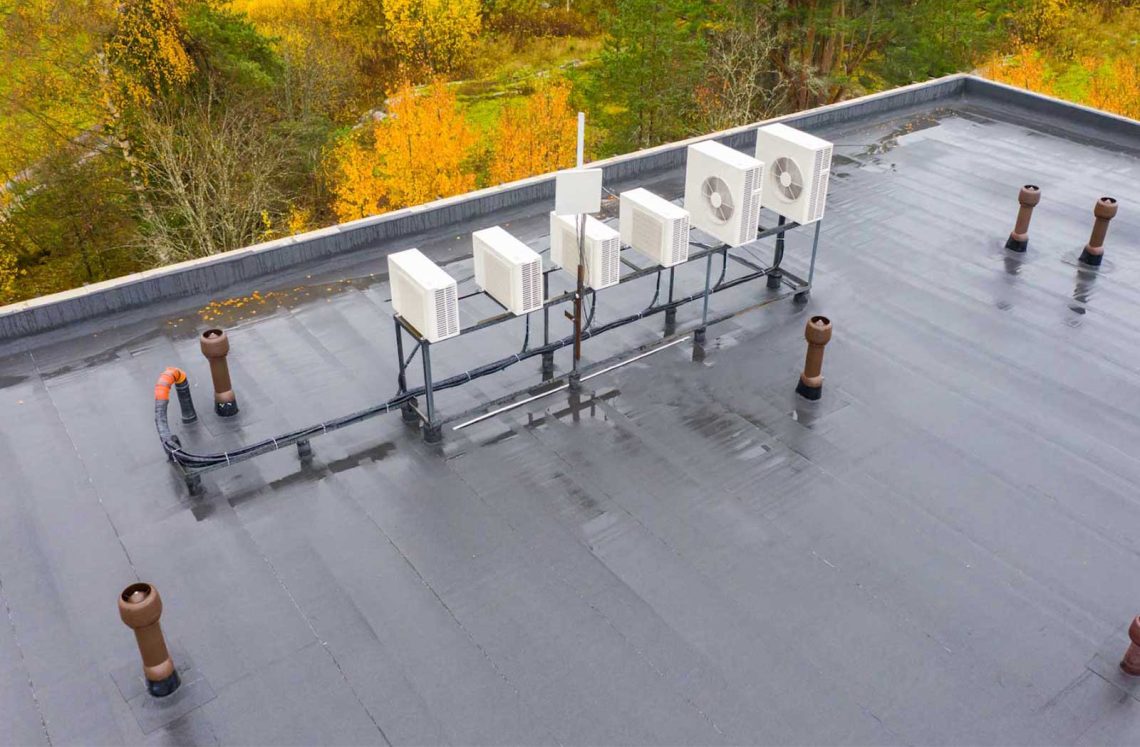
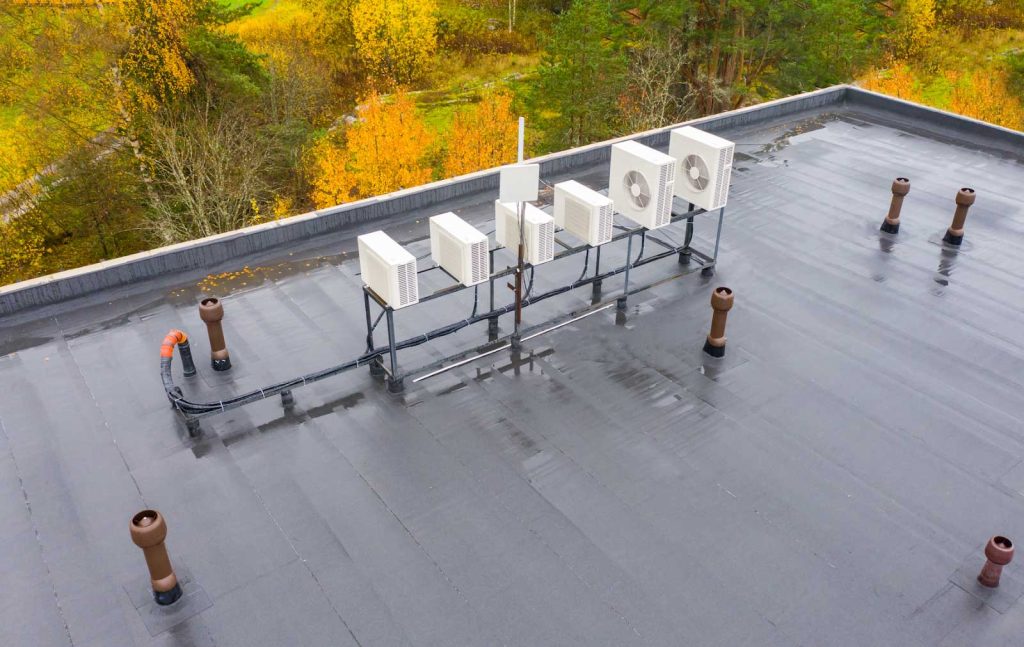
HVAC units, skylights, vents, and solar mounts break through the roof surface. Sealants and flashing around them should be solid and watertight. Gaps around penetrations are among the most common leak points we find.
Assess Roof Edges and Flashing
Loose edge details or failing flashing allow water to get underneath the system. Check for lifting or peeling at the perimeter. Reinforcing edges with professional repairs keeps water where it belongs—outside the building.
Monitor Interior Signs
Don’t forget to look inside. Water stains on ceilings, musty odors, or spikes in energy bills can all point to roof issues. Interior clues often reveal problems hidden on the roof surface.
Seasonal Flat Roof Maintenance in New Jersey
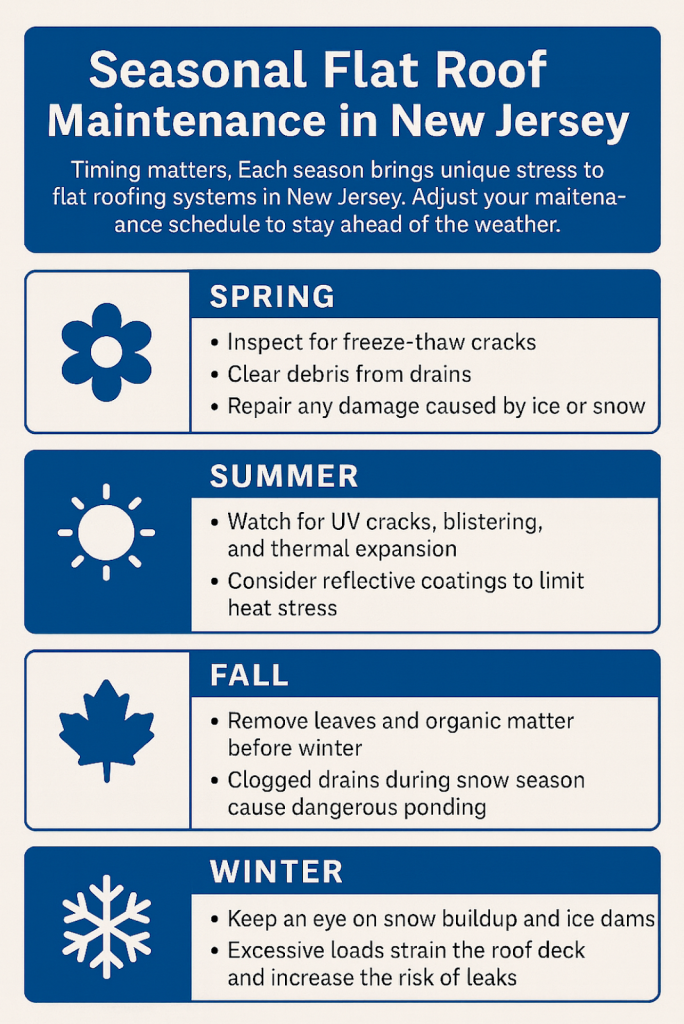
Timing matters. Each season brings unique stress to flat roofing systems in New Jersey. Adjust your maintenance schedule to stay ahead of the weather.
- Spring: Inspect for freeze-thaw cracks, clear debris from drains, and repair any damage caused by ice or snow.
- Summer: Watch for UV cracks, blistering, and thermal expansion. Consider reflective coatings to limit heat stress.
- Fall: Remove leaves and organic matter before winter. Clogged drains during snow season cause dangerous ponding.
- Winter: Keep an eye on snow buildup and ice dams. Excessive loads strain the roof deck and increase the risk of leaks.
By following these seasonal steps and staying consistent, property owners can avoid expensive emergencies and extend the life of their roofs.
How Often Should Flat Roofs Be Inspected in NJ?
Flat roofs in New Jersey should be inspected twice per year, once in the spring and again in the fall. These seasonal checkups identify winter damage and prepare the roof for snow and ice.
Inspections after major weather events—hail, windstorms, or heavy rainfall—are just as important.
Roofs with solar panels, HVAC units, or frequent foot traffic need more frequent evaluations. Added equipment increases wear and tear, and more roof activity raises the risk of damage. Staying proactive helps property owners avoid costly emergency calls.
Why Professional Inspections Still Matter
Walking your own roof for a quick look is helpful, but professional inspections go deeper. Contractors trained in commercial systems use infrared scanning, moisture detection, and structural assessments to reveal issues you can’t see.
Dream Home Roofing is licensed across New Jersey and experienced with every major flat roof system, including TPO, EPDM, Modified Bitumen, PVC, and built-up designs. Our inspections are preventative, not reactive. We find small problems before they disrupt tenants or business operations.
As a certified VERSICO contractor, Dream Home Roofing can provide up to 20-year manufacturer-backed labor warranties. This added level of coverage protects property owners by pairing expert maintenance with long-term warranty support.
Why Choose Dream Home Roofing for Flat Roof Maintenance in NJ?
Dream Home Roofing is fully licensed and insured to work across New Jersey. We handle solar panel removal and reinstallation in-house, so nothing slows down your inspection or repair. Our crews deliver transparent reports with photo documentation and provide fast response when problems surface.
Our certification with VERSICO means we’re able to extend manufacturer-backed labor warranties of up to 20 years on eligible flat roof systems. It’s one more way we help clients protect their investment with both proven workmanship and lasting warranty protection.
From Hamilton and Trenton to Freehold, Newark, and Edison, we’ve helped property owners protect thousands of square feet of commercial roofing. We know the systems, we know the climate, and we know how to keep your flat roof performing longer.
FAQ: Flat Roof Maintenance in New Jersey
How often should I clean my flat roof drains?
Drains should be cleared at least twice a year, ideally in spring and fall. Properties surrounded by trees may need quarterly cleanings.
What’s the average cost of flat roof maintenance in NJ?
Routine maintenance services often range from \$250 to \$750, depending on roof size and scope. Extensive repairs will add to that total.
Can I walk on my flat roof to perform maintenance?
Yes, but flat roofs are designed for limited foot traffic. Use designated walk pads if available, and avoid carrying sharp tools or heavy loads.
Do flat roof maintenance services include debris removal?
Most maintenance programs include debris clearing around drains and scuppers. Larger cleanups may be billed separately.
Is maintenance still required if my roof is under warranty?
Yes. Manufacturer warranties require documented maintenance to stay valid. Skipping inspections can void coverage.
Schedule Flat Roof Maintenance With Dream Home Roofing Today
A flat roof won’t tell you it’s failing until water finds its way inside. Regular maintenance prevents that risk. Dream Home Roofing makes it simple with licensed inspections, detailed reporting, and expert service for every type of flat roof system.
Call us today at (609) 533-2432 or request service online at www.dhroof.com.
A scheduled inspection now can save thousands in emergency costs later.
